The Nonsense of Limited Edition Photographs
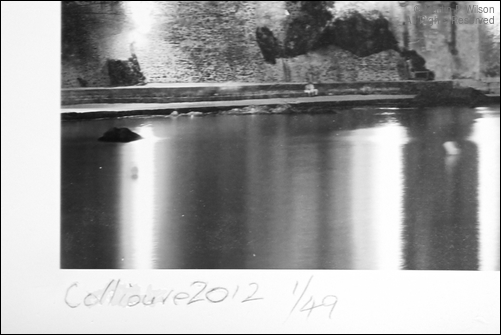
I am now back grappling with what form my "artwork" should take. Traditionally it would have been original prints (whatever that means, see What is an Original Print in Fine Art Photography?), or more generally these days, limited edition prints. I struggle with the idea of limited edition photographic prints in this modern digital world. Indeed, it does not make sense to me even for traditional "wet" photographic print making from a negative.
Traditional artists prints were produced, indeed still are, in limited editions because the engraved plate, the lithography stone, silk-screen, wood or even lino-cut wore out. It would only produce a limited number of good impressions before the quality started to suffer. The original master was created directly by the artist and could not simply be copied and replaced when it wore out - by which time the artist had usually moved on to other things.
With photographic prints that is not the case. Even a negative does not wear out so an essentially unlimited number of prints can be made, albeit subtly different. So why do photographers and galleries promote the myth of the limited edition? It is an artificial limit that has no relevance to the repeatable nature of photography. One must assume it is a way of creating artificial rarity to justify high prices and the hope of higher resale values, to make the photographic print an investment, not something simply to be enjoyed. It seems, to me at least, to be simply a marketing ploy and one that the unscrupulous can exploit by creating "new" editions at a different size or whatever.
In fact many painters using traditional mediums have jumped on this technologically enabled bandwagon. They now sell limited edition prints of their watercolours, oil or acrylic paintings. They are essentially photographic reproductions although sometimes they have some hand work to provide texture or colouring to give an aura of uniqueness. So these too are essentially artificially limited for marketing purposes.
I detect a backlash in the art world. Some commercial galleries stress that they only (or mostly) sell original art work; others go further and actually warn against the limited edition that is merely a reproduction of a traditional original painting.
So I have decided not to go the limited edition route. My signed prints will naturally be limited by my age, mortality and energy. That idea came from Brooks Jensen on a Lenswork podcast and like him I will reserve the right to close or withdraw an edition from sale if it no longer fits with my vision. All that will affect my thoughts on pricing my work, but that is another story, for another time.
As a final thought; many (probably most) limited editions do not sell out so it is doubly artificial to treat a signed print from the photographer any differently whether it is a limited edition or not.
Add new comment