Disappointment, Lesson on the Pursuit of Excellence
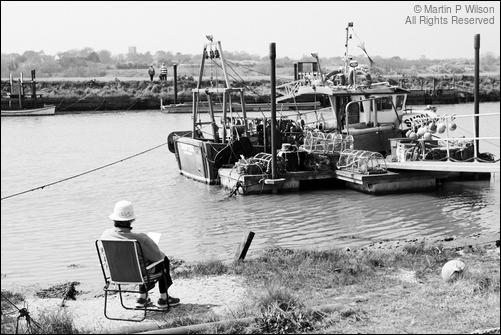
I was disappointed. After a recent trip to Suffolk my images did not satisfy me. Although I felt that artistically I had made progress I was surprised to find technical aspects seemed to have let me down. I am taking a brief diversion from my planned series of posts to share it and the lesson I take from it.
During that trip I had worked my way through most of Brook Jensen's podcasts on fine art photography and the creative process. He is the editor of LensWork magazine, a long time fine art photographer and I find that I agree with him on many matters. He believes art is the "pursuit of excellence" and that many aspiring art photographers are in "pursuit of commerce", expecting to make high-value sales even before they have built an audience. I have taken that thought on board. He has provided valuable insights that are helping with my attempts to put the soul, and pleasure, back into my photography.
Coming from a commercial approach I understand what he is saying and am actively working to change my thinking to pursue excellence. That is to make each piece of work better than the last. Pursuit of perfection in most fields gets in the way of achieving anything, perfection is unachievable and, arguably, incapable of definition or recognition. Pursuing perfection means that even excellent work is not good enough. Pursuit of excellence recognises good work, but with a slight sense of dissatisfaction, that it could be better still. I find a feeling of discomfort drives the improvement and desire I need to drive my pursuit of excellence.
I was slightly heartened by my recent feelings that my newest work could have been better. Indeed the results would have been fine as stock for my previous purposes. The dissatisfaction showed I was beginning to think in the right way, I just have to use it to make my work better.
From an artistic point of view (especially at this early stage) I was reasonably happy, one or two images had come out more or less as I hoped. I thought they worked but they were let down by technical failings. The issues were minor (would not show at web size so the problem image not posted) and would not have troubled me in the past, although I would have worked to correct them. But now they were getting in the way of my vision, what I was trying to achieve. At the very least they limit how I can use the pictures.
The question I have to resolve was; why? It could be that my equipment was not good enough - highly unlikely and easily tested. Perhaps I was pushing the limits of my camera and lens, trying to defy the laws of physics - possible but probably not the whole story. Much more likely was human failure, that my own technique was not sufficiently considered or careful. I had perhaps become a bit too carefree and even sloppy. I was most likely the problem, my disillusionment with my old photography life has probably led me to be less careful than I used to be, and need to be again now for my new work. So an important object lesson, but at least I am genuinely pursuing excellence otherwise I would not have spotted the failings.
Looking at the images more analytically I am sure that my failing is largely in my technique although there is a possibility I was getting into an area where the limits of physical optics were playing a part. The silly thing is that both would have been easily eliminated if I had been mindful of my technique. Like a serious musician or sportsman I need to practice every day, to go through my drills, play my scales; to work to make my technique second nature so that I can concentrate on my artistic vision, to strive for continuous improvement through "pursuit of excellence".
Lesson learned, no doubt there will be many more to come. I take comfort that I never told myself it would be easy.
Add new comment